class: profilo <h1>AI generativa - prospettive</h1><h2 class="author">Stefano Bussolon</h2> --- layout: true <img src="https://www.bussolon.it/assets/logo_250.png" width="50px" height="50px" style="position:absolute;top:5px;left:5px;"/><div id="footer" style="position:fixed; bottom: 0px;left: 0px;height: 40px; padding:5px; width: 100%;display: flex;align-items: center;"></div> --- ## Che impatto avrà l'intelligenza artificiale nel nostro futuro? --- ## L'impatto *visibile* * L'AI ha già avuto un impatto considerevole in alcuni ambiti, soprattutto nella programmazione, e avrà a breve un impatto sulla UI * L'AI sta diventando sempre più potente, e il trend è destinato a continuare --- ## L'impatto sulle aziende Thousands of CEOs admit AI had no impact on employment or productivity—and it has economists resurrecting a paradox from 40 years ago * [Thousands of executives aren't seeing AI productivity boom, reminding economists of IT-era paradox | Fortune](https://fortune.com/article/why-do-thousands-of-ceos-believe-ai-not-having-impact-productivity-employment-study/) Last November, the Federal Reserve Bank of St. Louis published in its State of Generative AI Adoption report that it observed a 1.9% increase in excess cumulative productivity growth since the late-2022 introduction of ChatGPT. A 2024 MIT study, however, found a more modest 0.5% increase in productivity over the next decade. across nearly 14,000 workers in 19 countries, workers’ regular AI use increased 13% in 2025, but confidence in the technology’s utility plummeted 18%, indicating persistent distrust. --- ## Le difficoltà nel mettere a terra l'AI [The “Last Mile” Problem Slowing AI Transformation](https://web.archive.org/web/20260415004406/https://hbr.org/2026/03/the-last-mile-problem-slowing-ai-transformation) Few companies have been able to fundamentally change their operating and business models around AI. The primary obstacle to progress is rarely model quality or data availability, but rather the “last mile” of transformation where technical capability must meet organizational design. There are seven frictions that contribute to this problem: proliferation of pilots, the productivity gap, process debt, the identity problem of tribal knowledge, agentic governance, architectural complexity, and the efficiency trap. To overcome these, companies need to focus on clean-sheet process redesign, strategically capturing knowledge, and managing their new digital workforce. * progetti pilota che non vengono coordinati e non vengono implementati * la produttività viene dispersa a causa di flussi di lavoro non ottimizzati per l'AI * debito organizzativo precedente: organizzazioni disfunzionali non *guariscono* con l'AI * la conoscenza delle persone non viene condivisa, e l'AI non può usarla * non sono stati implementati dei processi di approvazione dell'utilizzo delle AI * uso delle AI solo per tagliare i costi, ma con risultati deludenti * mancanza di formazione nell'uso profiquo dell'AI --- ## [The State of Organizations 2026 | McKinsey](https://www.mckinsey.com/capabilities/people-and-organizational-performance/our-insights/the-state-of-organizations#/) 10,000+ senior executives surveyed across 15 countries and 16 industries. AI Adoption Reality: 88% experimenting with AI, but 81% report no meaningful bottom-line gains; 86% feel unprepared for AI in day-to-day operations. ### Technology Disruption 1. *Unlocking the AI-enabled Organization:* Moving beyond fragmented pilots to double (technical & organizational) transformation for enterprise-wide value (88% experimenting, <20% see impact). 2. *Humans & AI Agents Collaboration:* Redefining capabilities and workflows for **hybrid human-AI teams**; unlocking exponential productivity gains requires building employee AI capabilities. 3. *AI Rewrites Shared Services:* Evolving from transactional hubs to AI-native Global Business Services (GBS) for innovation, orchestration, and end-to-end automation (84% plan expansion). ### Invest Decisively in AI * Pursue double transformation (tech *and* org redesign) beyond pilots. * Build employee AI capabilities at scale for human-AI collaboration. * Develop clear leadership ownership (C-suite sponsorship critical) and governance. * Address ethical/regulatory concerns proactively. --- # Livella vs leva --- 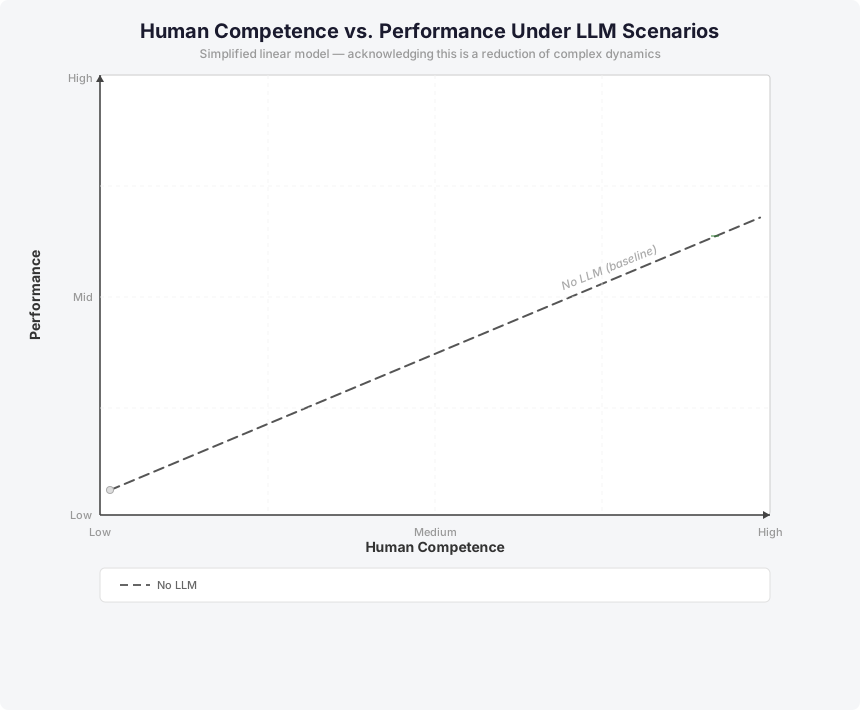 --- 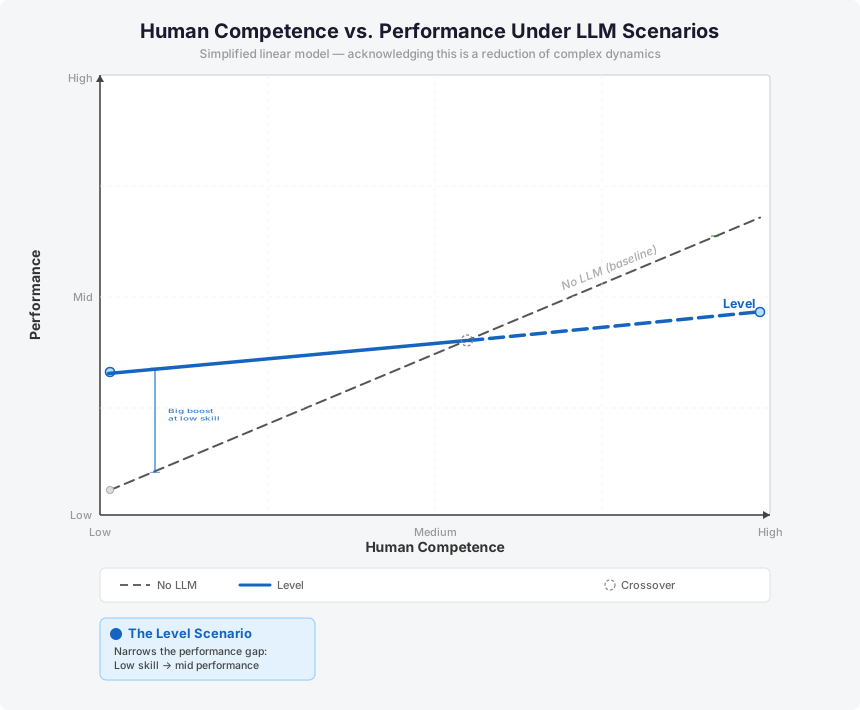 --- 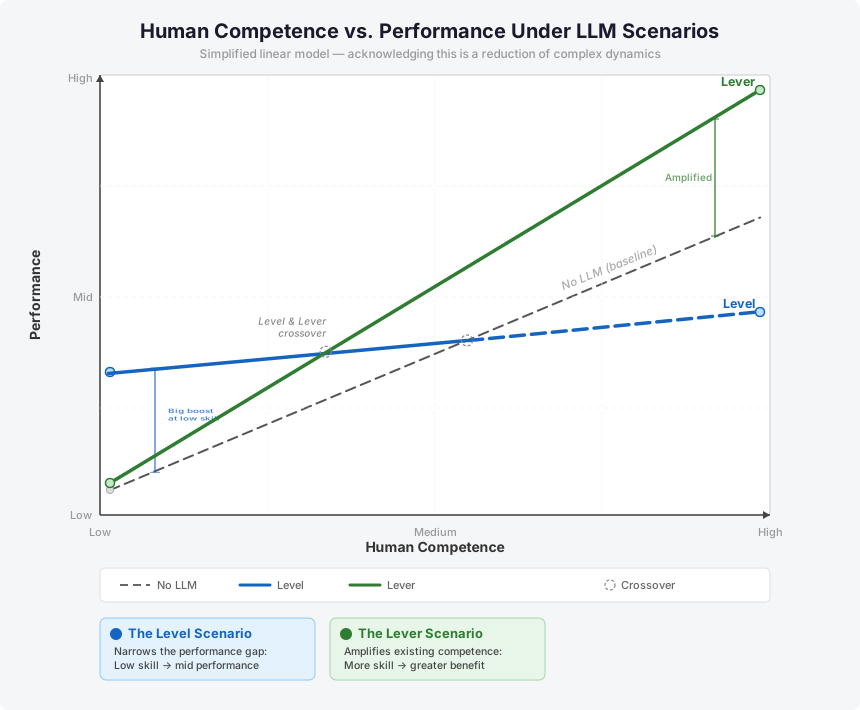 --- 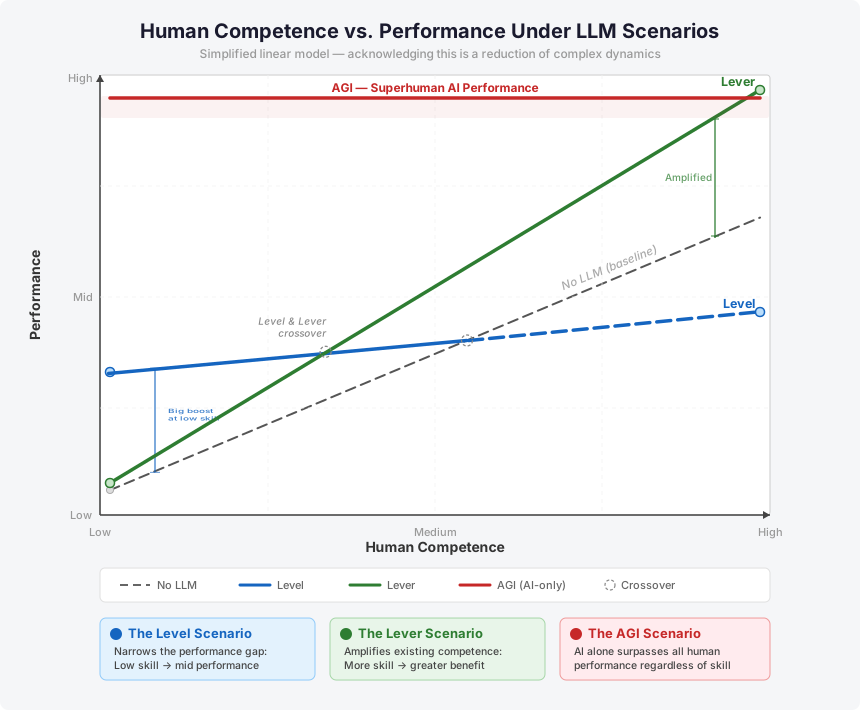 ---  --- ## Suggerimenti * dobbiamo imparare a fare le cose senza AI * dobbiamo imparare a farci aiutare dalle AI per fare le cose in cui siamo scarsi (livella) * dobbiamo imparare a farci aiutare dalle AI per fare meglio le cose che sappiamo fare bene --- ## Focus sulle persone Se - grazie al vibe coding - creare un MVP è sempre meno complicato, la differenza sostanziale sarà nella capacità di capire di cosa le persone hanno veramente bisogno.